

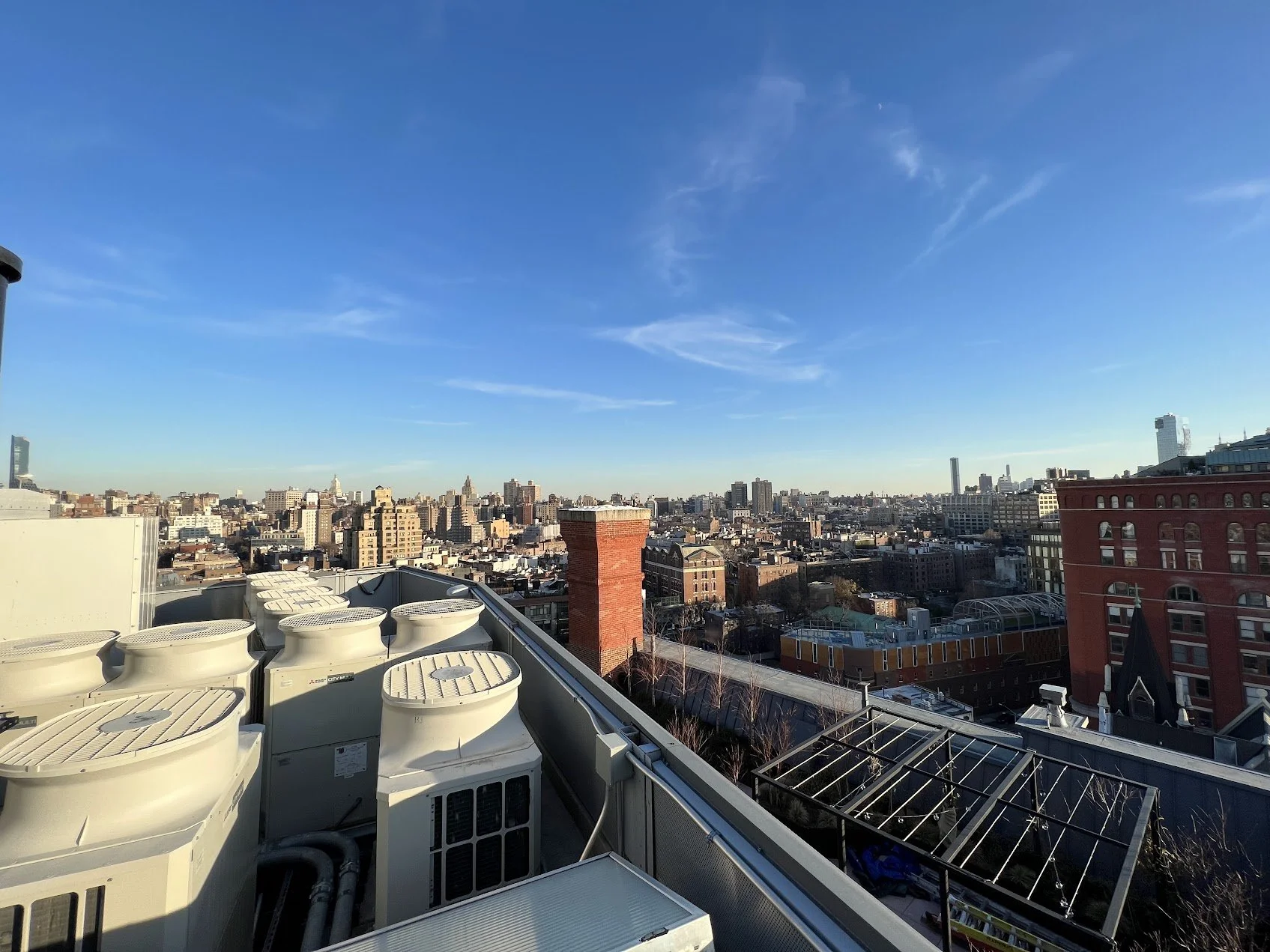
Local Law 97
If you own or manage a building over 25,000 square feet in New York City, Local Law 97 already affects you — whether you've dealt with it yet or not.
The basics
Local Law 97 sets annual limits on how much carbon a covered building is allowed to emit. It applies to roughly 50,000 buildings citywide — the ones responsible for the largest share of NYC's emissions. If a building goes over its limit, the penalty is $268 per metric ton of CO₂ over the cap, charged every single year the building stays non-compliant.
The current caps, covering 2024 through 2029, are the easier phase. Estimates suggest 63% of covered buildings will exceed the stricter 2030-2034 limits if they don't make changes now.
What actually gets measured
The law isn't about which specific air conditioner you own — it's about a building's total emissions from every energy source: electricity, natural gas, fuel oil, and district steam. Older systems running on fuel oil or inefficient steam heat carry the heaviest emissions burden. Modern electric heat pumps — including VRF systems — carry the lightest.
That's why heat pump retrofits are the single biggest lever most buildings have. Studies suggest air-source heat pumps can cut space heating emissions by roughly 80% compared to fossil fuel heating in a typical NYC building.
Who signs off on compliance
Here's something worth knowing: the certified emissions report has to be signed by a Registered Design Professional — a licensed Professional Engineer or Registered Architect. HVAC contractors don't certify these reports. What contractors do is the physical work that gets a building under the cap: heat pump installations, refrigerant transitions, controls upgrades, and the ongoing maintenance that keeps equipment running efficiently.
What building owners should do now
Get a real assessment of where your building's emissions currently stand
Understand which of your systems are the biggest contributors
Talk to a contractor who understands both the compliance timeline and the mechanical work involved
Don't wait until 2029 — the beneficial electrification credits reward buildings that upgrade before 2030
JLL Mechanical works alongside Professional Engineers and architects to help NYC property owners and managers plan and execute the retrofit work that Local Law 97 requires. If you're not sure where your building stands, that's exactly the conversation worth having before the tighter caps hit.
Have questions about your building's HVAC systems and Local Law 97? Contact JLL Mechanical Inc. and we'll talk through it.